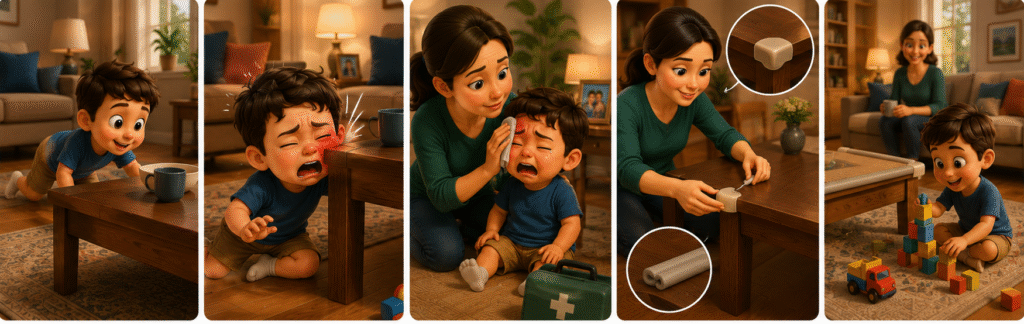
When babies begin crawling and toddlers start taking their first steps, every piece of furniture becomes part of their world. Unfortunately, coffee tables, dining tables, TV stands, desks, and countertops often have sharp corners that can cause serious injuries during a simple fall.
Children are naturally curious and still developing their balance. A momentary stumble can result in a painful collision with a sharp table edge, leading to cuts, bruises, broken teeth, eye injuries, or even head trauma.
The good news is that these accidents are largely preventable. With a few affordable safety products and some simple changes around the home, you can significantly reduce the risk of injury.
Why Are Sharp Table Edges Dangerous?
Young children fall frequently while learning to crawl, walk, and run. Because many tables have hard, pointed corners positioned at head height, even a minor fall can result in serious injury.
Common injuries include:
- Cuts and deep lacerations
- Bruises and swelling
- Broken or chipped teeth
- Eye injuries
- Facial injuries
- Head trauma
- Concussions in severe cases
The risk is greatest for babies and toddlers under five years of age.
Common Household Furniture That Can Cause Injuries
Parents often focus on electrical outlets and stairs but overlook everyday furniture.
Pay special attention to:
- Coffee tables
- Dining tables
- Glass tables
- TV stands
- Side tables
- Study desks
- Kitchen islands
- Bedside tables
- Marble countertops
- Wooden benches
Walk through your home from a child’s eye level to identify potential hazards.
Signs Your Home May Not Be Child Safe
Your home may need childproofing if:
✔ Tables have exposed sharp corners.
✔ Glass tables are within children’s play areas.
✔ Heavy decorative items are placed on table edges.
✔ Children frequently play near furniture.
✔ Walkways are crowded with furniture.
✔ Children are learning to crawl or walk.
How to Protect Children from Sharp Table Edges
1. Install Soft Corner Guards
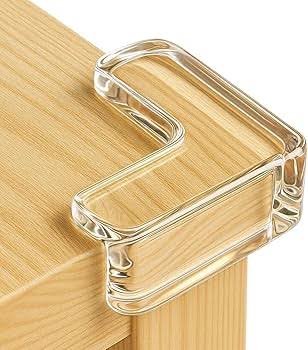
Corner guards are one of the easiest and most effective childproofing products available.
Made from soft silicone, rubber, or foam, they cushion sharp corners and help reduce the impact if a child falls.
Install them on:
- Coffee tables
- Dining tables
- TV stands
- Desks
- Kitchen counters
2. Use Furniture Edge Protectors
Long table edges can be just as dangerous as corners.
Flexible edge protectors create a soft barrier along the sides of tables, countertops, shelves, and TV units.
They are especially useful for homes with active toddlers.
3. Choose Rounded Furniture Where Possible
If you’re buying new furniture, consider designs with rounded edges instead of sharp square corners.
This simple choice can greatly reduce injury risks without affecting the appearance of your home.
4. Keep Play Areas Away from Hard Furniture
Create a dedicated play area away from coffee tables, glass furniture, and other hard surfaces.
Soft play mats provide a safer environment for crawling babies and energetic toddlers.
5. Secure Glass Tables
Glass coffee tables and side tables deserve extra attention.
If possible:
- Replace ordinary glass with toughened or laminated safety glass.
- Apply shatter-resistant safety film.
- Add corner protectors to exposed edges.
6. Remove Unnecessary Furniture
Sometimes the safest solution is simply creating more space.
Removing unused side tables or decorative furniture can reduce the chances of falls and collisions.
7. Supervise Young Children
No safety product can replace adult supervision.
Children learning to stand and walk should always be monitored, especially around hard furniture.
Recommended Child Safety Products
Corner Guards
Soft silicone or rubber corner guards cushion sharp furniture corners and help reduce injuries during falls.
Furniture Edge Protectors
Foam or silicone edge protectors cover long table edges to provide additional protection.
Non-Slip Furniture Pads
Help prevent lightweight tables from sliding if bumped by children.
Shatter-Resistant Safety Film
Ideal for glass tables and cabinets. The film helps hold broken glass together if it shatters, reducing the risk of serious cuts.
Soft Play Mats
Provide a cushioned surface for babies learning to crawl and toddlers taking their first steps.
Room-by-Room Safety Tips
Living Room
- Install corner guards on coffee tables.
- Anchor heavy TV stands.
- Keep toys away from hard furniture.
Dining Room
- Fit corner protectors to dining tables.
- Push chairs fully under the table when not in use.
- Avoid tablecloths that children can pull.
Bedroom
- Protect bedside tables.
- Keep furniture away from play areas.
What Should You Do If a Child Hits Their Head?
Most minor bumps improve with rest and observation.
Seek immediate medical attention if your child:
- Loses consciousness.
- Vomits repeatedly.
- Becomes unusually sleepy.
- Has a seizure.
- Has heavy bleeding that won’t stop.
- Has difficulty walking or speaking.
- Shows unusual behavior after the injury.
When in doubt, have your child evaluated by a healthcare professional.
Frequently Asked Questions
Are corner guards really effective?
Yes. While they cannot prevent every injury, they significantly reduce the force of impact and help protect children from cuts and bruises.
Are foam or silicone corner guards better?
Both are effective. Silicone guards are often more durable and blend better with modern furniture, while foam guards provide extra cushioning.
At what age should I install corner guards?
As soon as your baby begins crawling, ideally before they start pulling themselves up or taking their first steps.
Do I need corner guards on every table?
Focus first on tables located in areas where children spend the most time, such as the living room, dining room, and play areas.
Create a Safer Home Today
Sharp table edges are one of the most overlooked hazards in many homes, yet they can cause painful injuries in just a split second. By installing corner guards, covering exposed edges, creating safe play areas, and supervising young children, you can greatly reduce the risk of accidents.
Need help childproofing your home? We can supply or help you source many of the safety products mentioned in this guide, including corner guards, furniture edge protectors, shatter-resistant safety film, and other child safety solutions. Click the button below to request a free quote, or send us a WhatsApp message to discuss the best products for your home.
Want to discover even more hidden hazards around your home? Download our complete Child Safety Guide and learn practical, room-by-room tips to help keep your children safe every day.