
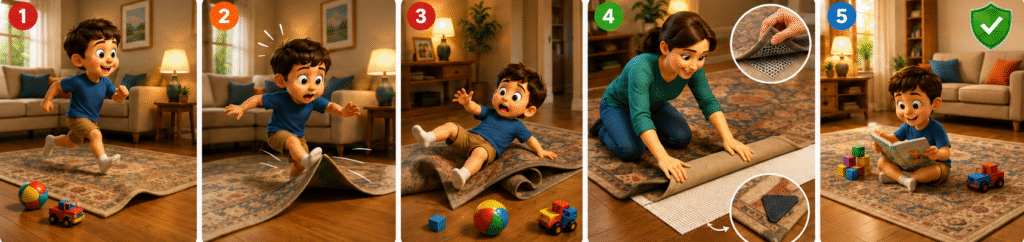
Rugs and carpets make our homes and workplaces warmer, quieter, and more attractive. However, a loose rug without proper grip can quickly become a hidden safety hazard.
Every day, children running through the house, older adults walking with reduced balance, or even healthy adults carrying groceries can trip over curled rug edges or rugs that slide across smooth floors. These accidents often happen in seconds and may result in serious injuries.
Fortunately, preventing rug-related accidents is simple. By using anti-slip rug pads, rug grippers, and following safe placement practices, you can significantly reduce the risk of slips and falls.
Whether you live in Nairobi, Mombasa, Kisumu, Nakuru, Eldoret, or anywhere in Kenya and East Africa, securing loose rugs should be part of every home’s safety plan.
Why Are Loose Rugs Dangerous?
Loose rugs can move unexpectedly on tile, marble, wood, vinyl, or polished concrete floors. They may also develop curled corners or wrinkles over time.
Common causes include:
- No anti-slip backing
- Worn-out rug pads
- Curled edges
- Lightweight rugs
- Uneven flooring
- High foot traffic
- Children running indoors
- Pets pulling rugs while playing
These hazards can easily cause someone to lose their balance.
Who Is Most at Risk?
Although anyone can fall, the following groups face a higher risk:
- Babies learning to crawl
- Toddlers learning to walk
- Young children running indoors
- Older adults
- Pregnant women
- People with disabilities
- Hospital patients
- Employees carrying heavy items
Where Should Rug Safety Be Considered?
Loose rugs should be checked in:
Homes
- Living rooms
- Bedrooms
- Hallways
- Kitchens
- Bathrooms
- Stair landings
- Entryways
Schools
- Classrooms
- Libraries
- Staff rooms
- Reception areas
Hospitals & Clinics
- Waiting rooms
- Patient rooms
- Corridors
- Consultation rooms
Hotels
- Guest rooms
- Reception areas
- Conference rooms
Offices
- Reception areas
- Boardrooms
- Corridors
- Executive offices
Churches & Community Centres
- Entrances
- Hallways
- Meeting rooms
Injuries Caused by Rug-Related Falls
Falls caused by loose rugs can result in:
- Head injuries
- Broken wrists
- Hip fractures
- Sprained ankles
- Knee injuries
- Back injuries
- Cuts and bruises
- Dental injuries
Young children and older adults are particularly vulnerable.
Warning Signs Your Rugs May Be Unsafe
Check your rugs for these common hazards:
✔ They slide when walked on.
✔ Corners curl upward.
✔ Wrinkles develop across the surface.
✔ The anti-slip backing is worn out.
✔ Rugs overlap each other.
✔ Rugs are placed near stairs without being secured.
✔ The rug is too small for the space.
How to Prevent Rug Accidents
1. Install Anti-Slip Rug Pads
The simplest and most effective solution is using high-quality anti-slip rug pads beneath your rugs.
These pads help keep rugs firmly in place while also providing extra cushioning and protecting your flooring.
Choose a rug pad that matches the size of your rug for the best performance.
2. Use Rug Grippers or Rug Tape
For smaller rugs, non-slip rug grippers or double-sided rug tape can help prevent movement.
Ensure the tape or grippers are suitable for your floor type and won’t damage the surface.
3. Replace Damaged Rugs
Rugs with torn edges, loose threads, or worn backing should be repaired or replaced.
A damaged rug presents a greater tripping hazard than a well-maintained one.
4. Keep Walkways Clear
Avoid placing rugs where they create obstacles in busy walkways.
Ensure rugs lie flat and do not overlap.
5. Use Low-Pile Rugs in High-Traffic Areas
Thick rugs may catch shoes, walking aids, or children’s feet.
Low-pile rugs are generally a safer choice in entrances, hallways, and frequently used areas.
6. Pay Extra Attention to Stairs
Never leave small rugs loose on staircases or stair landings.
Use stair runners that are securely fastened or avoid rugs altogether in these areas.
7. Clean Rugs Regularly
Dust, sand, and dirt beneath rugs can reduce grip and increase movement.
Regular cleaning also extends the life of your rug and its anti-slip backing.
Recommended Safety Products
Anti-Slip Rug Pads
Help keep rugs securely in place while adding comfort and protecting your floors.
Rug Grippers
Designed to hold rug corners flat and reduce movement on smooth flooring.
Double-Sided Rug Tape
Provides additional grip for lightweight rugs and mats in low- to moderate-traffic areas.
Stair Carpet Grips
Help keep stair runners securely attached and reduce the risk of slips on staircases.
Entrance Floor Mats
High-quality entrance mats help trap dirt and moisture while reducing slip hazards at doorways.
Common Mistakes
❌ Placing rugs directly on polished tile without a rug pad.
❌ Ignoring curled corners.
❌ Using damaged rugs.
❌ Overlapping multiple rugs.
❌ Placing loose rugs near staircases.
❌ Failing to replace worn anti-slip backing.
Myths About Rug Safety
Myth: Heavy rugs cannot move.
Fact: Even heavy rugs can shift, wrinkle, or develop curled edges over time.
Myth: Rug corners are harmless.
Fact: A raised corner is one of the most common causes of trips and falls.
Myth: Falls only happen to older people.
Fact: Children, adults, and older people can all suffer serious injuries from loose rugs.
Rug Safety Checklist
Before finishing this guide, ask yourself:
☐ Do all rugs have anti-slip backing?
☐ Are rug corners lying flat?
☐ Are walkways free of loose rugs?
☐ Are stair rugs securely fastened?
☐ Are damaged rugs replaced?
☐ Are entrance mats secured?
☐ Are rugs cleaned regularly?
If you answered No to any of these questions, your home or workplace could benefit from simple safety improvements.
What Should You Do If Someone Falls?
If someone trips over a rug:
- Help them move to a safe place if they can do so comfortably.
- Check for bleeding or signs of a serious injury.
- Apply first aid where appropriate.
- Seek medical attention if they have severe pain, cannot bear weight, lose consciousness, or may have a head, neck, or hip injury.
- Investigate why the fall occurred and correct the hazard before someone else is injured.
Frequently Asked Questions
Are anti-slip rug pads better than rug tape?
Both can be effective. Rug pads generally provide better cushioning and grip over larger areas, while rug tape may be suitable for smaller rugs when used correctly.
Can I use anti-slip pads on tile floors?
Yes. Many anti-slip rug pads are designed for tile, wood, laminate, and vinyl floors. Always check the manufacturer’s recommendations for compatibility.
Should schools and offices secure rugs?
Absolutely. Any building with public access should ensure rugs and entrance mats are properly secured to reduce the risk of slips and falls.
How often should rug pads be replaced?
Replace them if they become worn, lose grip, or show signs of damage. Follow the manufacturer’s guidance for inspection and replacement.
Request a Free Quote
Want to make your home or workplace safer?
We supply and help source anti-slip rug pads, rug grippers, stair safety solutions, entrance mats, and other home and workplace safety products across Kenya.
Click the button below to request a free quotation or send us a WhatsApp message. We’ll help you choose the right products to reduce slip and trip hazards.
Download the Complete Child Safety Guide
Loose rugs are just one of many hidden hazards that can cause preventable injuries.
Download our comprehensive Child Safety Guide and discover practical room-by-room safety tips to help protect children, older adults, and everyone in your home