
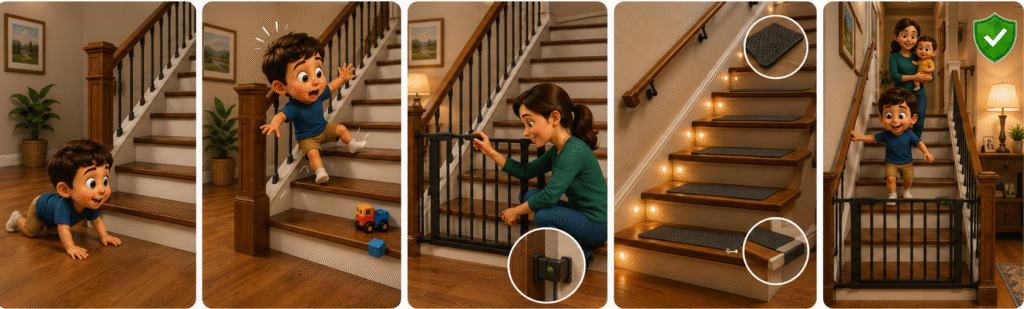
Staircases connect different levels of a building, but they are also one of the most common places where serious falls occur. A single missed step can lead to broken bones, head injuries, or even life-threatening accidents.
Young children are especially vulnerable because they are naturally curious and may crawl or walk toward stairs before they fully understand the danger. Older adults, pregnant women, and people carrying heavy objects also face increased risks.
The good news is that most staircase accidents are preventable. By installing safety gates, maintaining secure handrails, improving lighting, reducing slip hazards, and inspecting staircases regularly, you can dramatically improve safety.
Whether you live in Nairobi, Mombasa, Kisumu, Nakuru, Eldoret, or anywhere in Kenya and East Africa, making your staircase safe should be one of your top home safety priorities.
Why Are Staircases Dangerous?
A staircase combines several hazards:
- Changes in elevation
- Hard surfaces
- Sharp edges
- Limited balance while climbing
- Slippery steps
- Poor lighting
- Human error
Children may:
- Crawl toward open stairs
- Run up or down steps
- Skip steps while playing
- Carry toys on the stairs
- Climb handrails
- Push siblings during play
Even one small mistake can result in a serious fall.
Who Is Most at Risk?
Although anyone can fall, the highest-risk groups include:
- Babies learning to crawl
- Toddlers learning to walk
- Young children
- Older adults
- Pregnant women
- People with mobility difficulties
- Individuals carrying children
- Workers carrying equipment
Where Should Stair Safety Be Considered?
Stair safety is important in:
Homes
- Main staircases
- Outdoor steps
- Garage entrances
- Apartment buildings
Schools
- Classroom blocks
- Dormitories
- Administration buildings
- Auditoriums
Hospitals
- Emergency exits
- Public stairwells
- Staff access stairs
Hotels
- Guest staircases
- Emergency escape stairs
Offices
- Office buildings
- Warehouses
- Shopping centres
Churches
- Main entrances
- Stages
- Choir platforms
- Balcony staircases
Common Causes of Stair Accidents
Many accidents happen because of:
- Missing safety gates
- Slippery stair surfaces
- Broken or loose handrails
- Poor lighting
- Toys left on stairs
- Wet steps
- Uneven stair heights
- Running on stairs
- Damaged stair edges
Injuries Caused by Stair Falls
Falls on stairs may result in:
- Head injuries
- Brain injuries
- Broken arms
- Broken legs
- Hip fractures
- Back injuries
- Neck injuries
- Cuts and bruises
- Permanent disability
- Fatal injuries in severe cases
How to Make Your Staircase Safer
1. Install Safety Gates
Safety gates are one of the most effective ways to protect babies and toddlers.
Install them:
- At the top of the stairs
- At the bottom of the stairs
Choose gates designed for staircases and install them according to the manufacturer’s instructions.
Avoid pressure-mounted gates at the top of stairs unless the manufacturer specifically states they are suitable for that location.
2. Install Strong Handrails
Every staircase should have sturdy handrails that are firmly attached.
Handrails should:
- Be easy to grip
- Extend the full length of the staircase where practical
- Be checked regularly for looseness
Teach children to always use the handrail.
3. Install Anti-Slip Stair Treads
Smooth tiles, polished wood, and painted concrete can become slippery.
Anti-slip stair treads or adhesive strips improve traction and reduce slips.
These are especially useful in homes with children or older adults.
4. Improve Stair Lighting
Poor visibility increases the risk of falls.
Install:
- Bright LED lighting
- Motion-sensor lights
- Emergency lighting
- Night lights
Replace burnt-out bulbs immediately.
5. Keep Stairs Free of Clutter
Never leave:
- Shoes
- Toys
- Bags
- Cleaning equipment
- Boxes
- Electrical cables
on staircases.
Always keep escape routes clear.
6. Install Child-Safe Balustrades
Children can slip through wide gaps between balusters.
Ensure openings comply with local building regulations.
Where necessary, install:
- Balustrade safety guards
- Mesh barriers
- Protective panels
7. Repair Damaged Stairs Immediately
Fix:
- Loose steps
- Broken tiles
- Cracked concrete
- Loose carpeting
- Worn stair nosing
Do not ignore minor defects.
8. Use High-Visibility Stair Nosing
Adding contrasting anti-slip stair nosing helps people clearly see the edge of each step.
This is particularly valuable in schools, churches, commercial buildings, and public facilities.
9. Supervise Young Children
No safety product replaces supervision.
Never allow young children to play on staircases.
Teach them:
- Hold the handrail.
- Walk—don’t run.
- One step at a time.
- Never push others.
Outdoor Stair Safety
Outdoor steps require additional attention because of:
- Rain
- Mud
- Moss
- Dust
- Poor drainage
Improve safety by:
- Installing anti-slip strips.
- Ensuring good drainage.
- Cleaning steps regularly.
- Repairing cracked concrete.
- Providing adequate lighting.
Recommended Safety Products
Child Safety Gates
Help prevent babies and toddlers from accessing staircases without supervision.
Anti-Slip Stair Treads
Increase grip on slippery stair surfaces.
Stair Nosing
Improves visibility and reduces slips by protecting the edge of each step.
Motion-Sensor Stair Lights
Automatically illuminate staircases during low-light conditions.
Heavy-Duty Handrails
Provide reliable support for children, adults, and older people.
Balustrade Safety Guards
Help prevent children from squeezing through large gaps in railings.
Corner Protectors
Protect children from injuries caused by sharp newel posts or nearby furniture.
Common Mistakes
❌ Leaving stair gates open.
❌ Installing the wrong type of gate.
❌ Using damaged handrails.
❌ Ignoring loose steps.
❌ Allowing toys to accumulate on stairs.
❌ Walking on stairs in slippery socks.
❌ Poor lighting at night.
Stair Safety Myths
Myth: My child knows how to use the stairs safely.
Fact: Even children who use stairs daily can trip, lose balance, or become distracted.
Myth: One handrail is enough for every staircase.
Fact: Depending on the staircase design and local building regulations, additional handrails may improve safety and accessibility.
Myth: Falls only happen to older people.
Fact: Stair accidents affect people of all ages, especially active young children.
Staircase Safety Inspection Checklist
Use this checklist every few months:
☐ Safety gates installed where needed.
☐ Handrails firmly secured.
☐ Anti-slip treads in good condition.
☐ Lighting working properly.
☐ No loose carpeting.
☐ Steps free from clutter.
☐ Stair edges clearly visible.
☐ Balustrades secure.
☐ Outdoor steps clean and slip-resistant.
If you answered No to any item, it’s time to improve your staircase safety.
What Should You Do If Someone Falls on the Stairs?
If someone falls:
- Stay calm and keep others away from the staircase.
- Call emergency medical services if the person has severe pain, loses consciousness, has heavy bleeding, or you suspect a serious injury.
- Do not move someone with a possible neck or spinal injury unless they are in immediate danger.
- Apply first aid where appropriate while waiting for medical help.
- Investigate the cause of the fall and correct the hazard before the stairs are used again.
Frequently Asked Questions
At what age can safety gates be removed?
There is no fixed age. Many families remove them once a child can safely use stairs consistently, but the decision depends on the child’s development and the home’s layout.
Are safety gates necessary at both the top and bottom of the stairs?
In many homes, installing gates at both locations provides better protection for babies and toddlers.
Can I install anti-slip strips on outdoor concrete stairs?
Yes. Many anti-slip products are designed for both indoor and outdoor use. Always choose products suitable for the surface and environment.
Should public buildings install anti-slip stair nosing?
Yes. Stair nosing improves visibility and traction and is commonly used in schools, hospitals, offices, hotels, shopping centres, and other public buildings.
Request a Free Quote
Want to make your staircase safer?
We supply and install child safety gates, anti-slip stair treads, stair nosing, handrails, balustrade safety guards, emergency lighting, and other staircase safety solutions for homes, schools, hospitals, churches, offices, hotels, and commercial buildings across Kenya.
Click the button below to request a free quotation or send us a WhatsApp message. Our team will help you choose the right products to improve the safety of your staircase.
Download the Complete Child Safety Guide
Staircases are just one of many hidden hazards that can lead to preventable injuries.
Download our comprehensive Child Safety Guide to discover practical, room-by-room safety tips that will help you identify hazards and create a safer environment for your family.